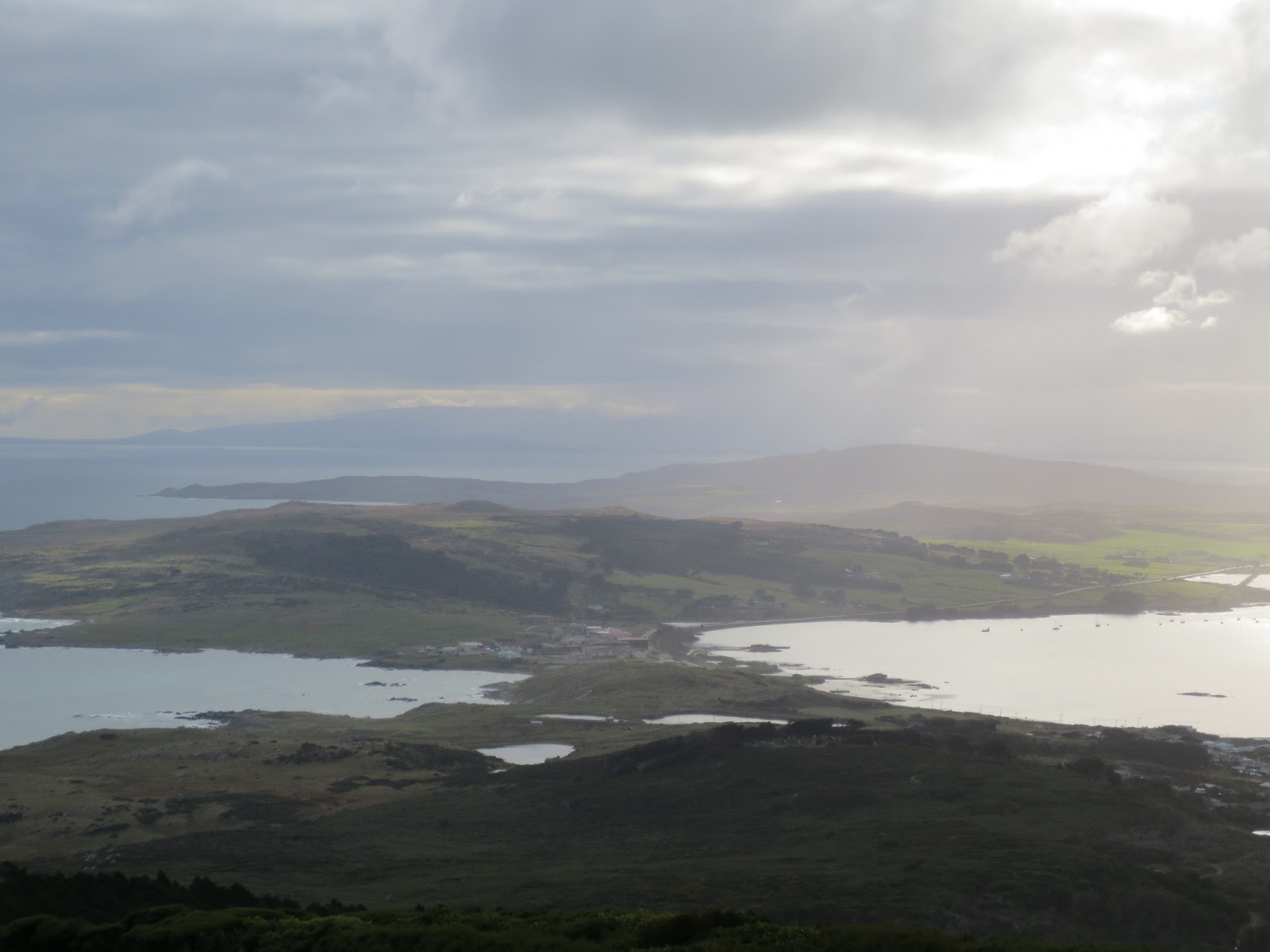
I’m riding on the back of a four-wheeler with the perfect
cone shaped volcanic Mt. Taranaki in the backdrop. A kiwi (New Zealander) farmer drives through
the lush green pastures and I listen as he describes each of his Ayrshire dairy
cows to me. This is one of my many
memories on my journey to learn more about the New Zealand dairy industry.
New Zealand is an island country of 4.4 million people which
is a little over half the population of New York City (8.1 million). They are located in the southwestern Pacific
Ocean and consist of a main North and South Island.
I was intrigued to travel to New Zealand ever since high
school because of the scope of their dairy industry. This goal became a reality when I had the
privilege to study abroad at the agriculture school, Lincoln University on New
Zealand’s South Island this past spring.
Going from a dairy farm in Pennsylvania to living in New Zealand
for four months, it took some time to get use to the differences within the industry. New Zealand is predominantly all pasture
based, seasonal production. This leads
to designated calving, breeding and drying off periods throughout the year. It gets confusing that their seasons are
opposite and the units of measurements are different. I heard discussions of kilograms of milk solids
per cow, stocking rates per hectare, pre and post grazing pasture mass,
six-week incalf rates and empty rates. The
stocking rate of cows per hectare is a farmer’s balancing challenge for milk
production, maintenance of pasture quality and environmental impacts. In reference to reproduction, the six-week incalf
rate is the percent of animals bred in the first six weeks of the breeding
season and the empty rate is the amount of animals that did not conceive. After grasping some of the different lingo, I
was able to further explore their industry.
Currently, the average herd size is 386 cows. Similar to the U.S, there is a trend of herds
getting larger. This is especially true
on the South Island where there are larger farms and ones that are being
converted from sheep to dairy.
New Zealand plays a key role on the global dairy
market. They export 95% of their milk
production making them the world’s largest exporter of dairy products. Although they are a smaller country they
produce 4% of the world’s milk. Dairy
farmers with their exporting mentality put more emphasis on producing high milk
solids because most of the milk is converted to milk powder for export. There has been an increasing trend according
to the New Zealand Dairy Statistics 2010/11 of the average milk solids per cow
which is currently 334kg (736 pounds) per lactation. In addition the average liters of milk
produced per cow in a season is 3,829 (1,011 gal).
New Zealand continues to uphold its strong dairy industry
and tackles challenges as discussed in my third year dairy science class. It was a different feeling at first being the
only foreign student in the class and not knowing anyone. The class was great for meeting more kiwis and
learning about the dairy industry through our class assignments. One of the assignments we completed was on
current issues affecting the industry. Three
current issues in New Zealand’s dairy industry that were commonly discussed
were inductions of calving, the public’s perception of ‘dirty dairying’ and
sustainability of housing versus pasture based systems.
I did not realize the use of inductions in seasonal systems
before going to New Zealand. Farmers can
sometimes induce cows to calve to match pasture growth. This results in many stillborn or weak
calves. In the current season farmers
are only allowed to induce up to 4% of the herd. Overall, inductions are becoming less common
and are being phased out.
The second issue focused on the term coined ‘dirty
dairying’. New Zealand works to maintain
a clean and green image. They have some
of the safest drinking water in the world.
I was amazed that the industry still faces criticism from the public through
activist groups similar in the U.S. Even
though the cows are not confined to barns the public is concerned about nitrate
leaching and dairy cows contaminating the water.
The current issue I explored was the sustainability of
pasture based compared to indoor housing systems. Factors included profitability, environmental
effects and animal wellbeing. During the
winter, wintering barns or standoff pads are more relevant in the Southland and
Otago areas because of higher moisture and colder temperatures. In addition, the economics play a significant
role in this decision making. Housed
systems are not common but will likely be seen more in the future especially on
the southern part of the south island. Overall,
it was really interesting to learn about these three current issues of
induction, ‘dirty dairying’ and sustainability of farming systems.
One of the big things that really surprised me was their
milking preparation procedures. I
realized on the first farm I visited that they do not pre-dip the cows, strip
or dry the teats off before milking the animal.
They just put the units on. If
the cow is really dirty they would wipe her off. I later found out from talking to other
farmers and in my dairy science class that this is a common practice. It was fascinating when my lecturer said that
New Zealand’s research has found that in the grazing system the pre-dipping
procedures do not make much of a difference.
I found this hard to believe and it is interesting that it works for
them. Post-dipping is still really
essential in their milking protocol and all the milk is pasteurized.
There are many additional contrasting points with the New
Zealand and U.S. dairy industry. In
general, the animals are shorter with more width, depth of fore and rear rib
and sound feet and legs to fit the grazing systems. There are more cross breeds called
Kiwicrosses than I realized. 38.9% of
the 4.5 million cows in New Zealand are Holstein-Friesian/ Jersey crossbreeds
while 40.0% are purebred Holstein-Friesian. In addition they are not allowed to use any
rBST and Fonterra is their main milk cooperative that farmers ship to.
Even with the differences between the New Zealand and United
States dairy industries. The farmers
continue to uphold the same high level of passion for what they do.
In reflecting on my time in the beautiful country of New
Zealand, I am so thankful for the opportunity.
I did not know anybody before going there and can’t believe all the
people I was able to meet. This whole
experience has given me a broader perspective on the agricultural
industry. It showed me the value of looking
at situations from alternative points of view.
There is not a one size fits all aspect in the dairy industry. Furthermore this experience has reinforced
the value of getting out of my comfort zone.
Building new skills and trying new things allowed me to grow more as an
individual and I encourage others to do the same.